Activities on the Importance of Seeds Carried Out in Schools During the Month of March
The Regional Directorate of Veterinary and Animal Welfare, through the Educational Services of the Madeira Livestock Station Dr. Carlos Dória, in partnership with the ISOPlexis Center, carried out a series of educational and playful activities throughout the month of March in several schools across the Region.
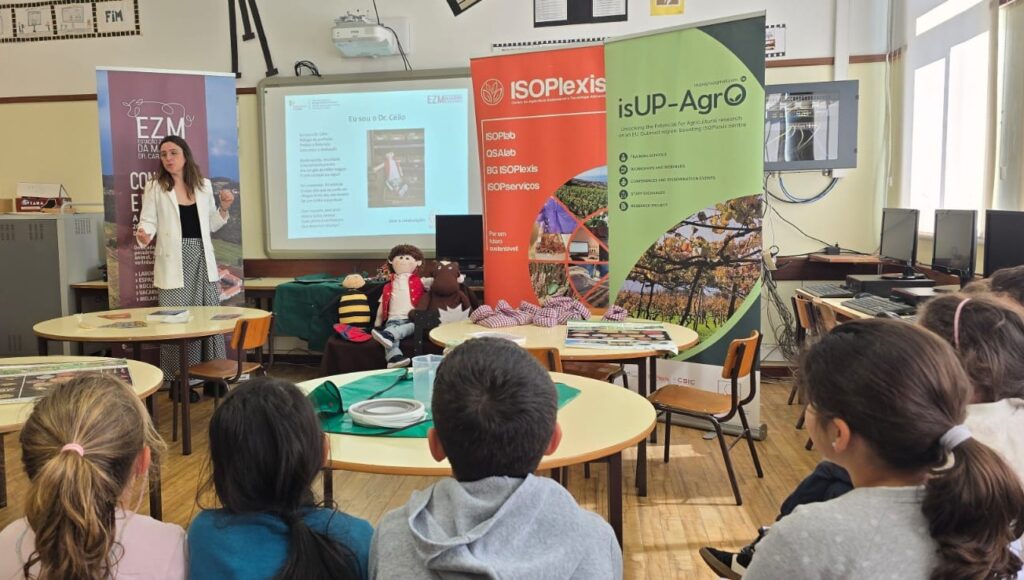
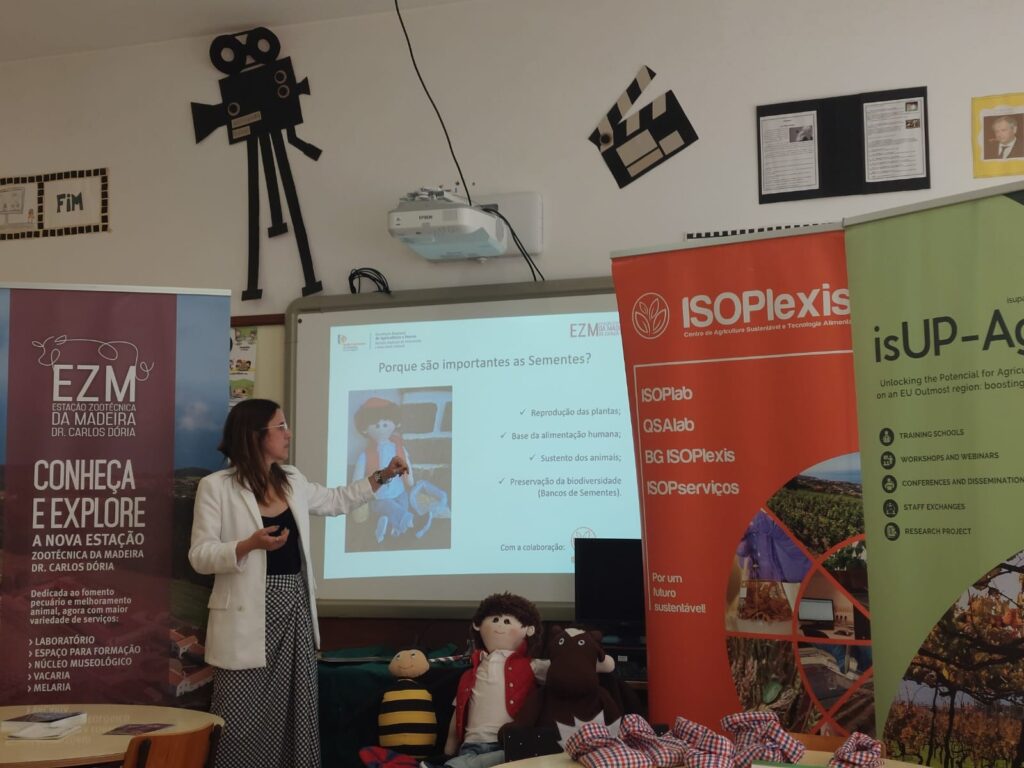
Senior Technician Dr. Cláudia da Costa, from the Regional Directorate of Veterinary and Animal Welfare, has been leading these activities in coordination with the ISOPlexis Center, while also promoting the dissemination of the work developed by this research center in the field of agrobiodiversity and plant genetic resource conservation. The sessions, under the theme “The Importance and Valorization of Seeds,” aimed to stimulate students’ curiosity, enthusiasm, and scientific thinking.
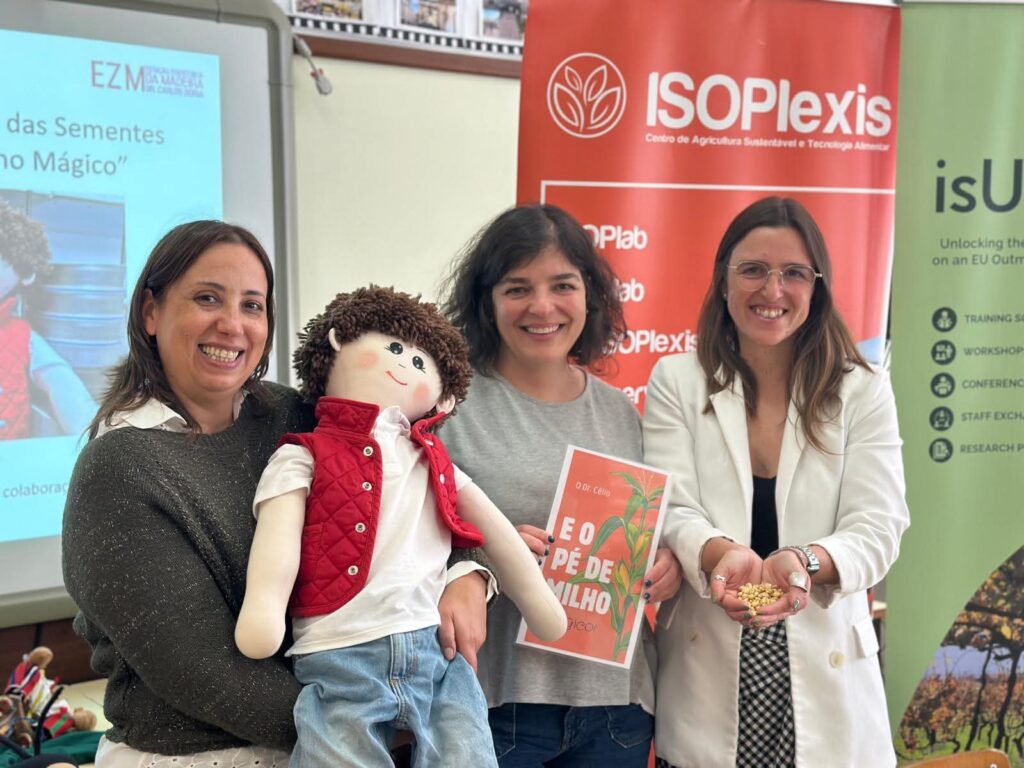
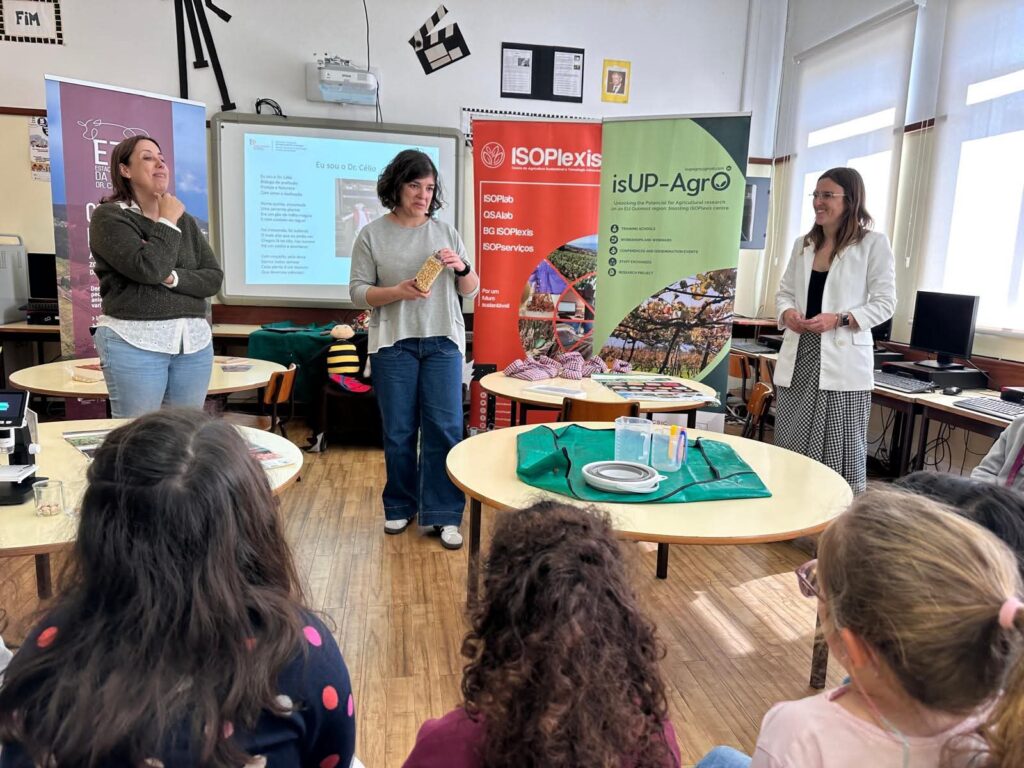
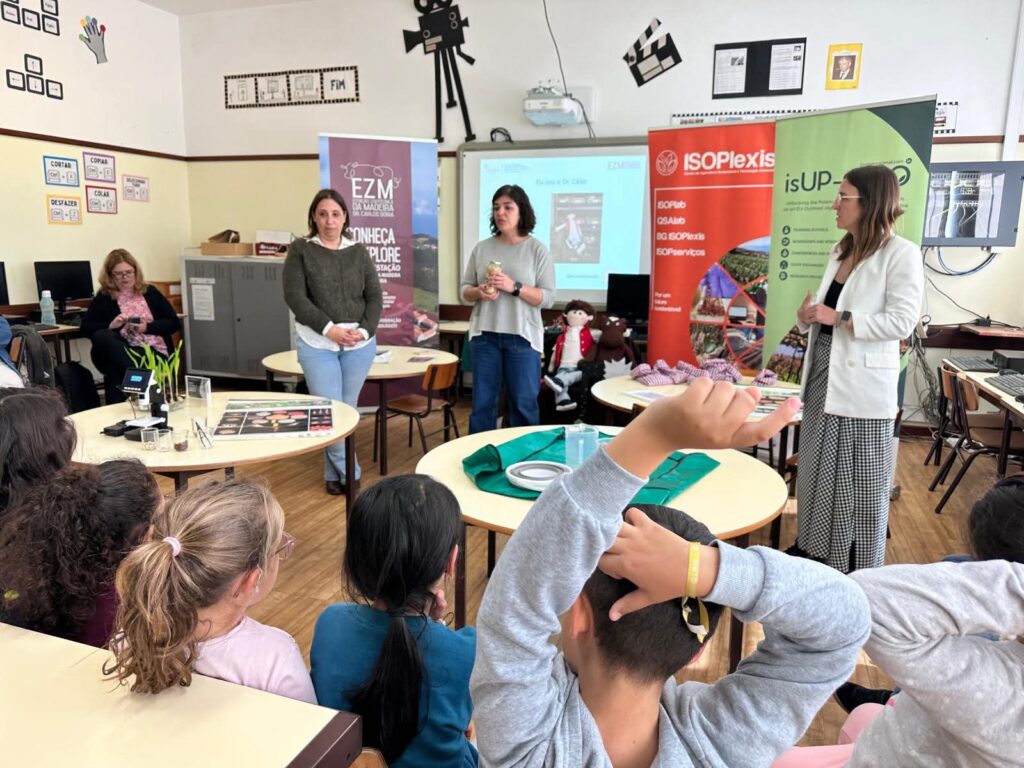
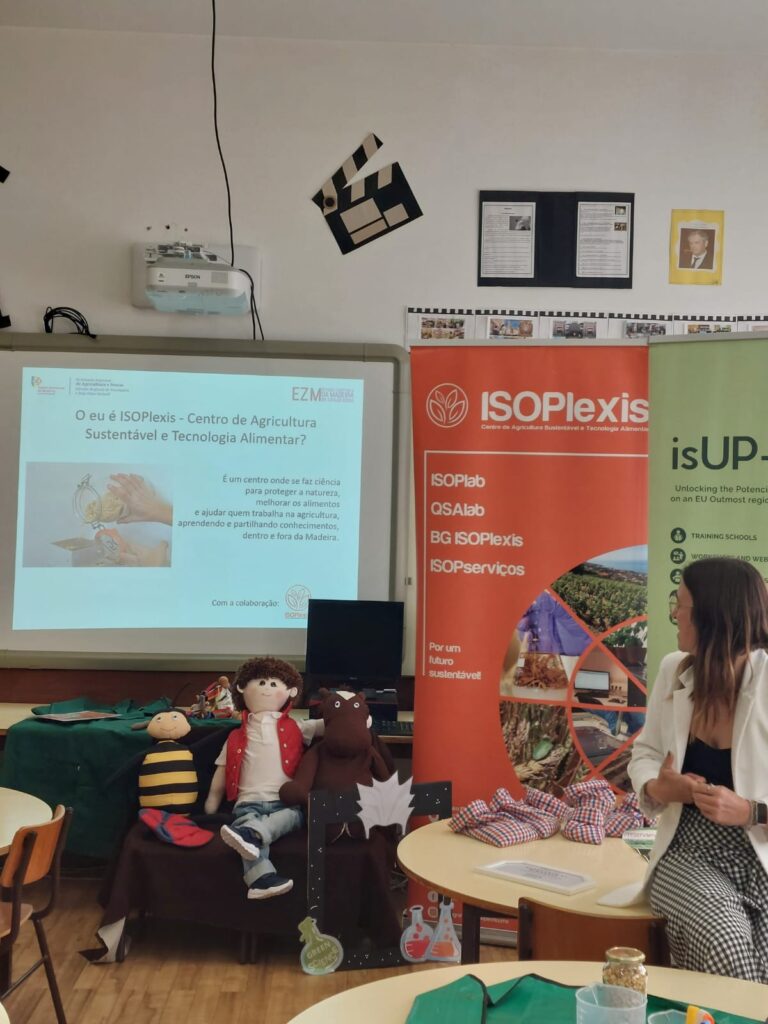
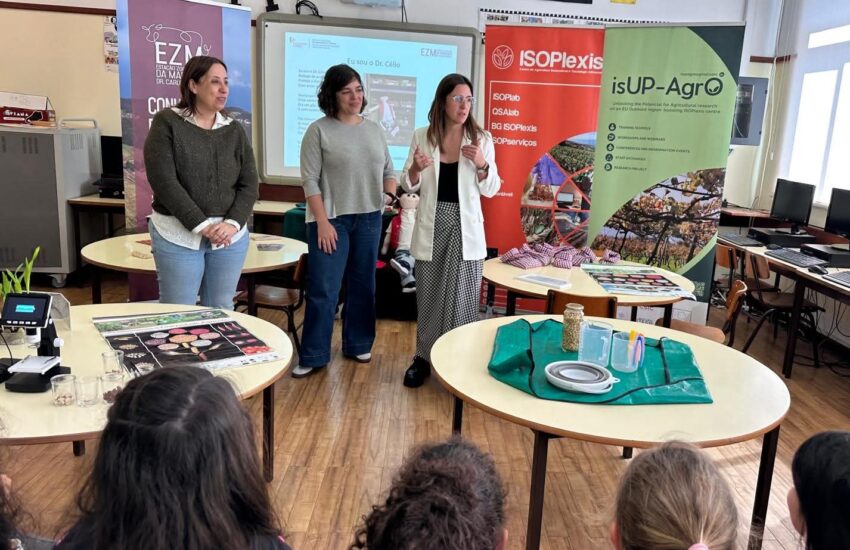
On March 25, the initiative took place at the Covão e Vargem Primary and Preschool, involving classes A and B of the 2nd grade. The activity also included the participation of Carla Gouveia, guest researcher at the ISOPlexis Center, and Sónia Ferraz Alves, Senior Technician at the ISOPlexis Center.
During the session, students had the opportunity to:
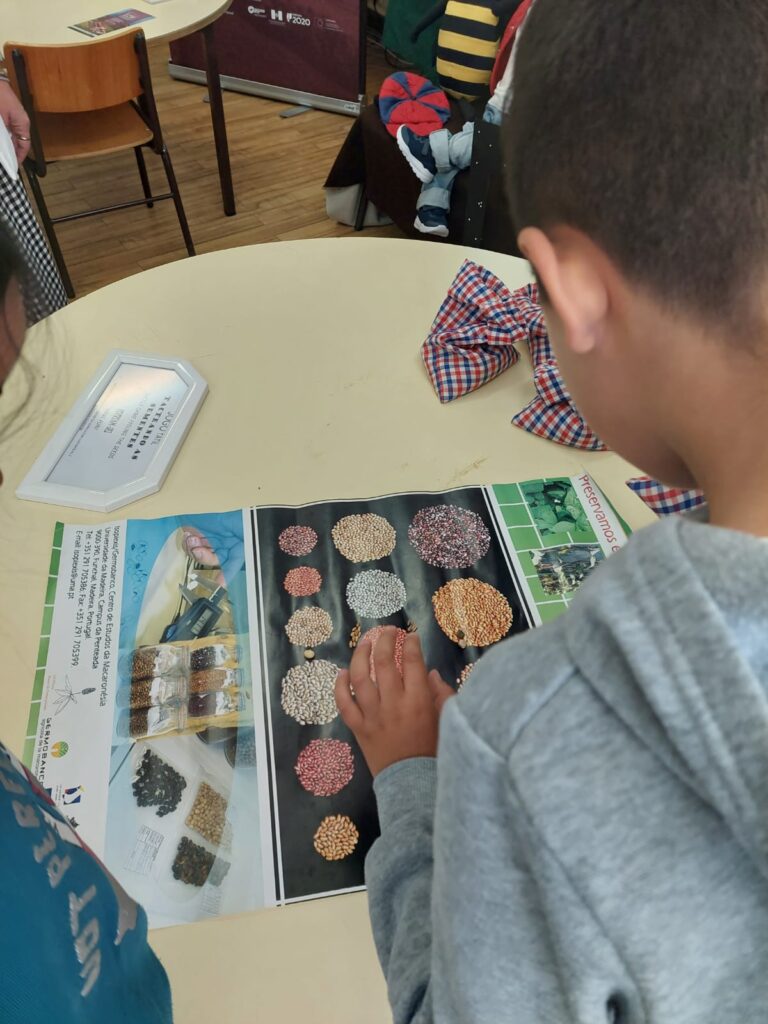
- • Learn, through photographs, about the work carried out at the Seed Bank – ISOPlexis;
- • Take a virtual visit to the Global Seed Vault – Svalbard Global Seed Vault, located in the Arctic;
- • Follow the entire process of maize sowing in trays, carried out at the Madeira Livestock Station, from sowing to harvest.
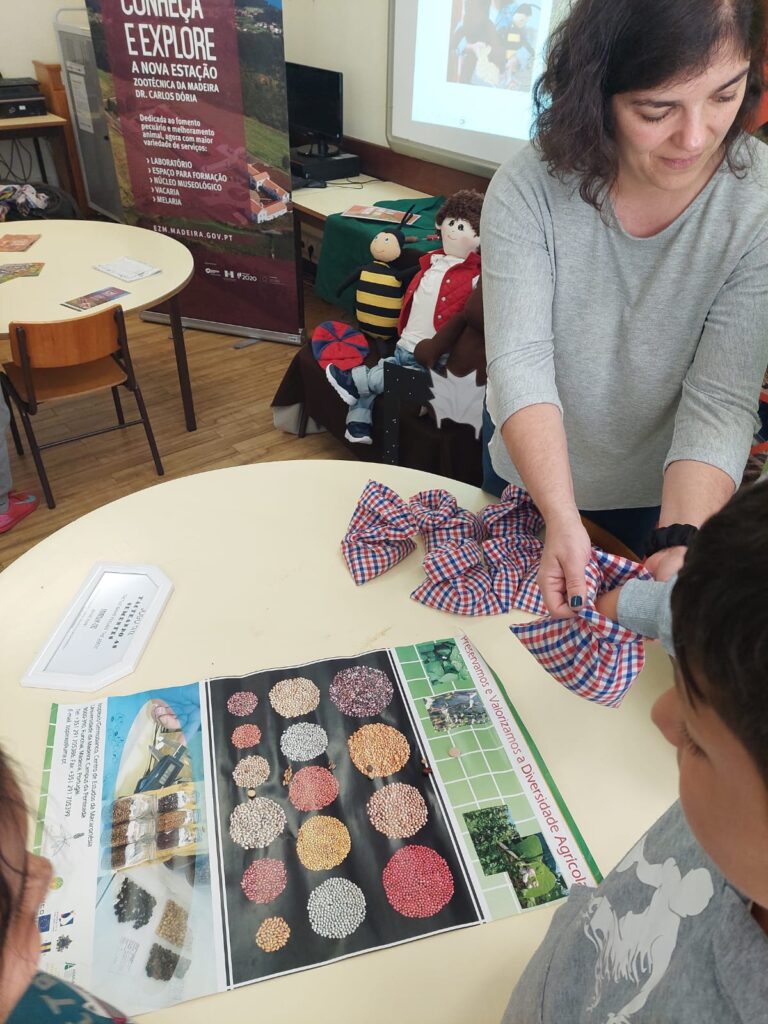
In the practical component, students learned how to select the best maize seeds for conservation and observed them under the microscope and magnifying glass, exploring their characteristics with a careful and scientific approach. The students also participated in the game "Feeling the Seeds," a sensory game where they identified the main seeds that make up their daily diet, such as peas, beans, corn, wheat, and others.
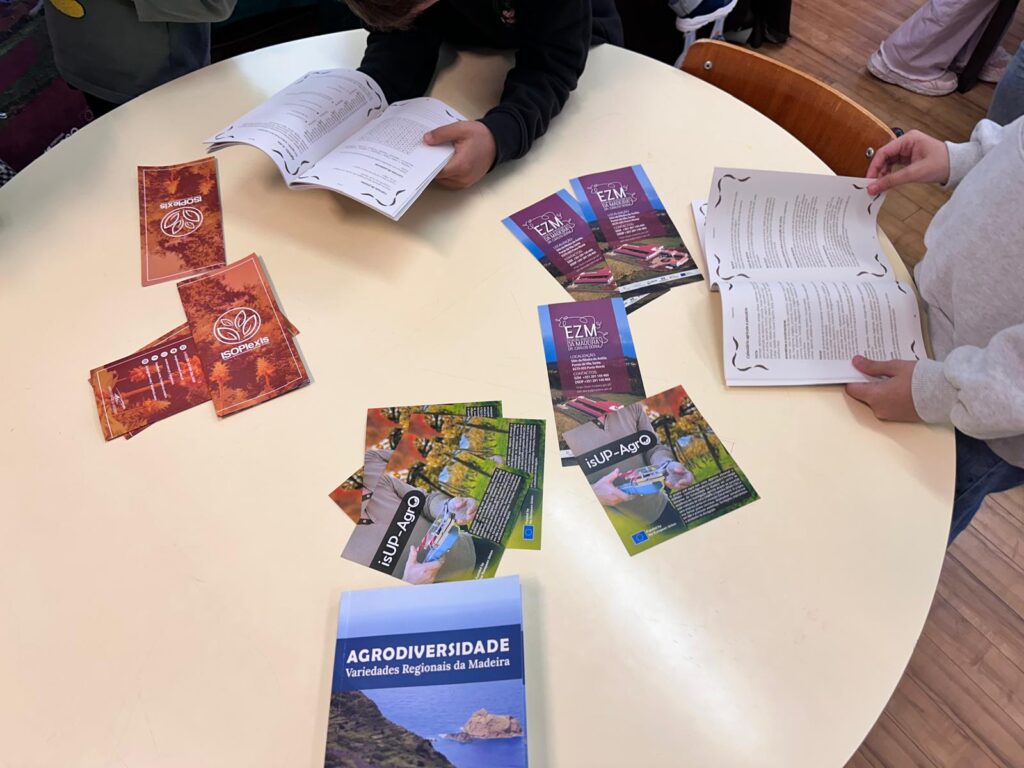
They also had the opportunity to consult the book “Agrobiodiversity – Regional Varieties of Madeira,” kindly offered to the school by ACOESTE – West Coast Association, as well as the agricultural almanac “A Corriola,” from the Regional Directorate of Agriculture and Rural Development.
The story “Dr. Célio and the Magic Corn Plant” was also explored, delighting participants and reinforcing the importance of preserving traditional varieties.
Each class received seeds to sow in the School Garden, as well as maize seedlings (already germinating) for later transplantation. In a gesture of responsibility and active citizenship, the classes committed to returning part of their production after harvest to the Regional Seed Bank, thus contributing to biodiversity preservation.
Throughout the month of March, these activities were also carried out in other schools across the Region, involving several educational institutions and dozens of students, promoting agricultural literacy, the conservation of traditional varieties, and the dissemination of the isUP-AgrO project.
Links to the activities in schools:
- • Covão e Vargem School (March 25, 2026): https://www.facebook.com/share/p/1CSRwYpUwA/
- • Rochinha College (March 17, 2026): https://www.facebook.com/share/v/1Cbiyh4QZV/
- • Estreito da Calheta School (March 16, 2026): https://www.facebook.com/share/p/1Dv96frCzg/
- • EB1/PE and Nursery of Jardim da Serra (March 10, 2026): https://www.facebook.com/share/1TAYuxvmiF/ e https://www.facebook.com/share/p/1B8ivKVcbn/
- • EB1/PE das Figueirinhas School (March 3, 2026): https://www.facebook.com/share/p/1CVo8UW5N5/